In short
Nearly every steam room failure is water at one of five junctions: wall-to-floor, the door threshold, the steam head penetration, the bench-to-wall joint and the ceiling. A correct build-up is cement board, a two-coat liquid membrane taped at every junction, full coverage including the ceiling, 1:80 floor falls, and a 24-hour flood test before any tile is laid.
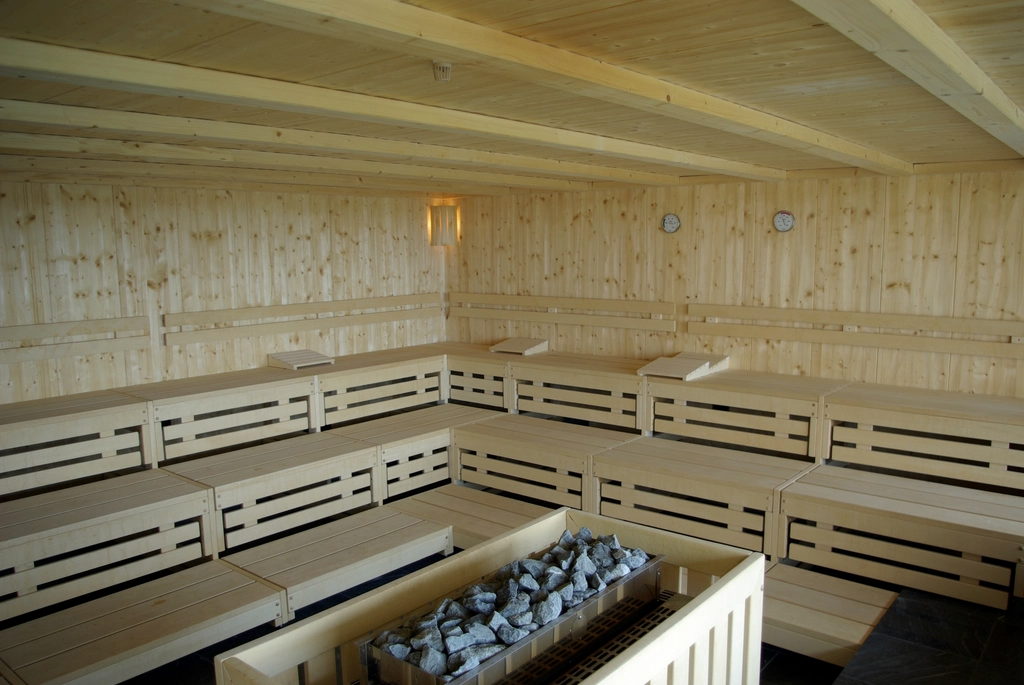
A steam room is a pressure vessel made of tile. It runs at 100% relative humidity for hours at a time, and vapour will find any path out of it — through grout, through a substrate joint, through the gap behind a shower tray flange. Once it is in the structure it stays there.
The five junctions
- —Wall to floor — the single most common failure. Needs a taped fillet, not a bead of membrane in a corner.
- —The door threshold — where the fall reverses and water sits.
- —Around the steam head — a penetration through the tanking at the hottest point in the room.
- —The bench-to-wall junction — a moving joint, and the one most often grouted rigid.
- —The ceiling — routinely skipped in Nepal, and the reason condensate drips on the user and rots the slab above.
What a correct build-up looks like
Want this answered for your room rather than in general?
Talk to a specialist- Substrate
- Cement board on treated frame — never plasterboard
- Membrane
- Two-coat liquid applied, with reinforcing tape at every junction
- Coverage
- Full room including ceiling, no exceptions
- Falls
- 1:80 on the floor to the gulley; 1:100 on the ceiling to the wall
- Test
- 24-hour flood test before any tile is laid
If it has not been flood tested, it has not been waterproofed — it has been decorated.
The test is the part that gets dropped when a programme slips. It costs a day. Repairing a failed tanking costs the room.